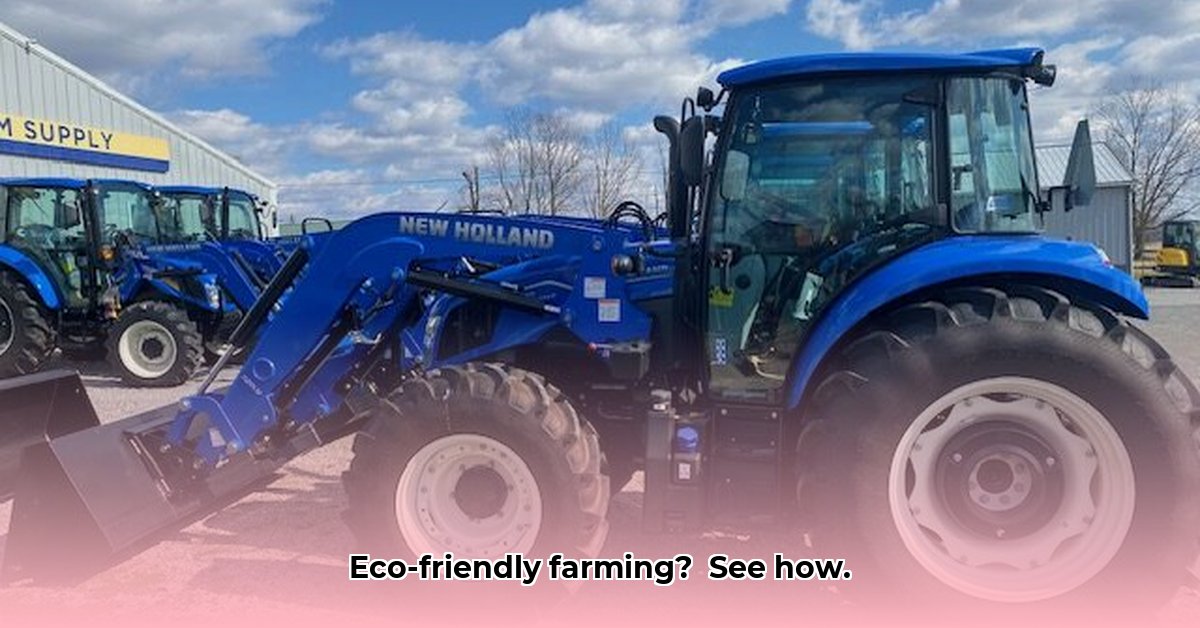
New Holland T9 Series: Eco-Friendly Power for Modern Farming
The New Holland T9 Series represents a significant advancement in agricultural technology, prioritizing both productivity and sustainability. This powerful tractor integrates advanced features designed to boost farm yields while minimizing environmental impact. This article provides an in-depth analysis of its key features, sustainability implications, and economic considerations. We'll examine how its innovative technology contributes to efficient and responsible farming practices. For more on New Holland equipment, check out this page.
Fuel Efficiency: Optimizing Resource Utilization
A cornerstone of the New Holland T9 Series is its enhanced fuel efficiency. While specific percentage gains vary depending on the model and operational context, New Holland claims improvements ranging from 2% to 10% over previous generations. This seemingly modest improvement translates to substantial cost savings over the lifetime of the tractor, especially for large-scale farming operations. Isn't maximizing fuel efficiency a critical component of sustainable farming?
Tier 4B/Final Stage V Engines and ECOBlue™ HI-eSCR Technology
The improved fuel economy is largely attributed to the implementation of Tier 4B/Final Stage V engines and ECOBlue™ HI-eSCR technology. These advancements optimize combustion, reducing emissions and maximizing fuel utilization. This technology represents a substantial leap in efficiency, directly impacting both operational costs and the tractor's environmental footprint.
Precision Farming: Data-Driven Decisions for Sustainable Yields
The T9 Series' integration of precision farming technologies is equally crucial to its sustainability profile. Systems like IntelliView 12 provide farmers with real-time data on various factors, enabling data-driven decision-making. This precision allows for optimized application of inputs such as fertilizers and pesticides, minimizing waste and reducing environmental impact. How much fertilizer is actually needed in each field section?
IntelliView 12 and GPS Guidance: Optimizing Resource Allocation
IntelliView 12, coupled with GPS guidance, plays a pivotal role in achieving precision. These technologies enable variable-rate application of inputs, ensuring that resources are used only where and when they are needed. This approach reduces waste and lowers the overall environmental impact, adding value to the "smart farming" concept. How does this streamlined approach affect your bottom line?
Sustainability Analysis: A Holistic View
While the T9 Series showcases impressive fuel efficiency gains, a comprehensive sustainability assessment requires a broader perspective. While data on fuel savings is readily available, further research is needed on aspects such as greenhouse gas emissions, water usage, and the long-term impact on soil health. A complete picture requires quantification across these key environmental factors.
Addressing Data Gaps: The Need for Further Research
The current data emphasizes fuel efficiency as a crucial element of the T9's sustainability story. However, achieving a holistic picture requires more detailed analysis of its long-term impact on greenhouse gas emissions, water consumption, and soil health. Further research is crucial to strengthen the narrative of sustainable agriculture.
Economic Considerations: Return on Investment (ROI)
The T9 Series represents a substantial investment. The initial purchase price, along with operational costs, must be carefully weighed against potential benefits. However, the combination of enhanced fuel efficiency, reduced input costs from precision farming, and increased productivity can lead to a positive return on investment (ROI) for many farmers.
Assessing ROI: A Multifaceted Approach
A thorough cost-benefit analysis is essential before investing in a T9 tractor. This analysis should incorporate the initial purchase price, ongoing operational expenses (including fuel and maintenance), potential increases in yield due to precision farming techniques, and the expected lifespan of the equipment. Extended service intervals can notably impact operational costs, contributing to a stronger ROI.
Future Outlook: Adaptability and Innovation
The future of agriculture demands equipment capable of adapting to evolving technologies and regulations. New Holland's commitment to research and development suggests continued enhancements in fuel efficiency, precision farming capabilities, and potentially, integration with renewable fuels. The tractor's adaptability will be crucial for its long-term success in a rapidly changing agricultural landscape.
Conclusion: A Step Towards Sustainable Agriculture
The New Holland T9 Series represents a significant step towards sustainable agriculture. Its advanced technology and focus on efficiency offer farmers a pathway to boost yields while minimizing environmental impact. However, ongoing research is needed to fully understand its broader sustainability implications. A thorough cost-benefit analysis is essential for farmers to determine if this technology aligns with their specific needs and objectives. The ongoing evolution of this technology and the increasing importance of sustainability in modern agriculture suggest a bright future for this innovative tractor.